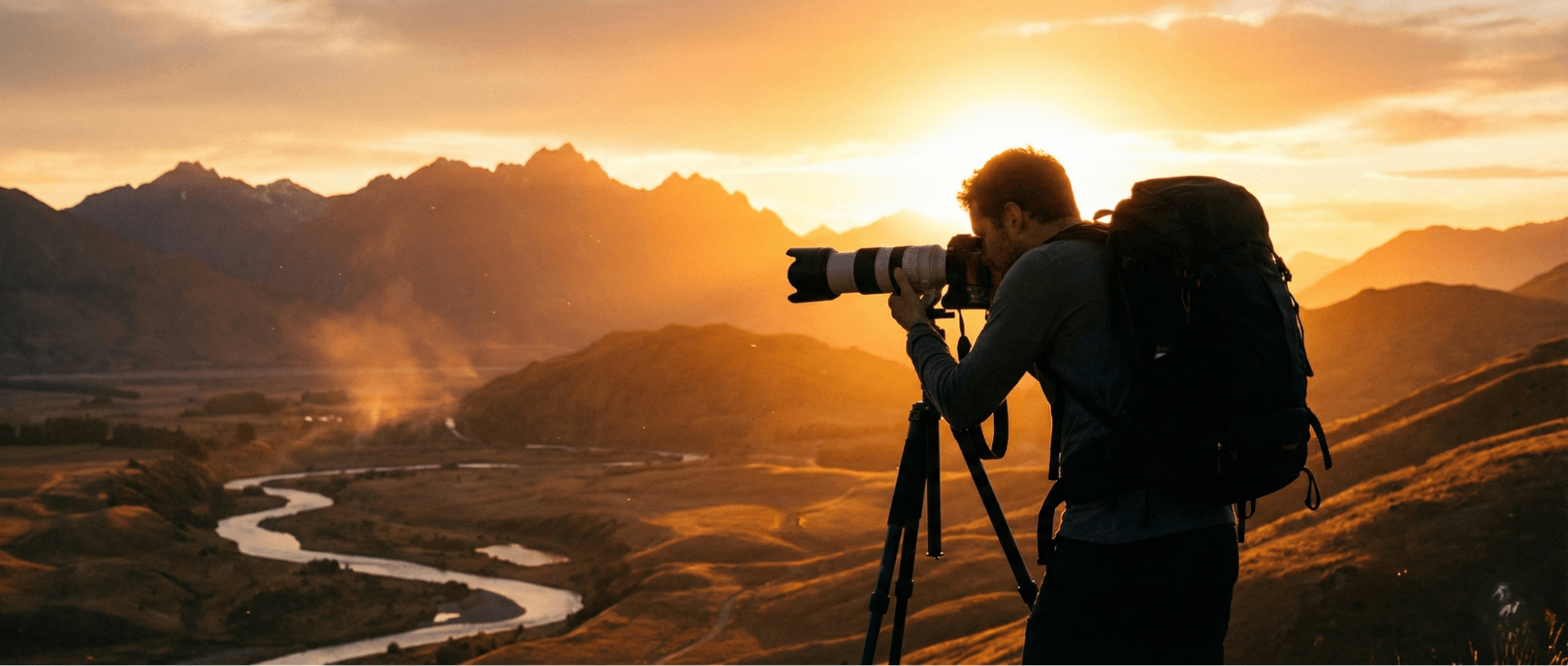
In the modern digital era, the question "what is the meaning of photography?" goes far beyond simply clicking a shutter button. We live in a world where visuals dominate our communication, from immersive social media feeds to Al-enhanced art. Photography remains the most powerful tool we have for freezing time, preserving memories, and telling stories without uttering a single word.
Whether you are capturing a fleeting candid moment of a loved one or crafting a high-definition marketing campaign, photography bridges the gap between reality and perception. For amateurs, it is a diary of life's highlights; for professionals, designers, and content creators, it is a critical instrument of influence and aesthetics. Understanding the true essence of photography allows you to see the world not just as it is, but as it feels.
1. Definition of Photography: More Than Just an Image
At its core, the word "photography" originates from the Greek words photos (light) and graphé (drawing). Quite literally, it means "drawing with light."
However, in the context of today's technology, the definition has expanded. Photography is the art, application, and practice of creating durable images by recording light, either electronically by means of an image sensor (digital/mirrorless) or chemically by means of a light-sensitive material (film).
Key Concepts Defining Modern Photography:
- Light: The fundamental ingredient; without light, there is no photo.
- Composition: How elements are arranged within the frame to guide the viewer's eye.
- Moment: The split-second decision to capture an event.
- Interpretation: With the rise of advanced editing and computational photography, the definition now includes how an image is processed to reflect the photographer's vision, not just raw reality.
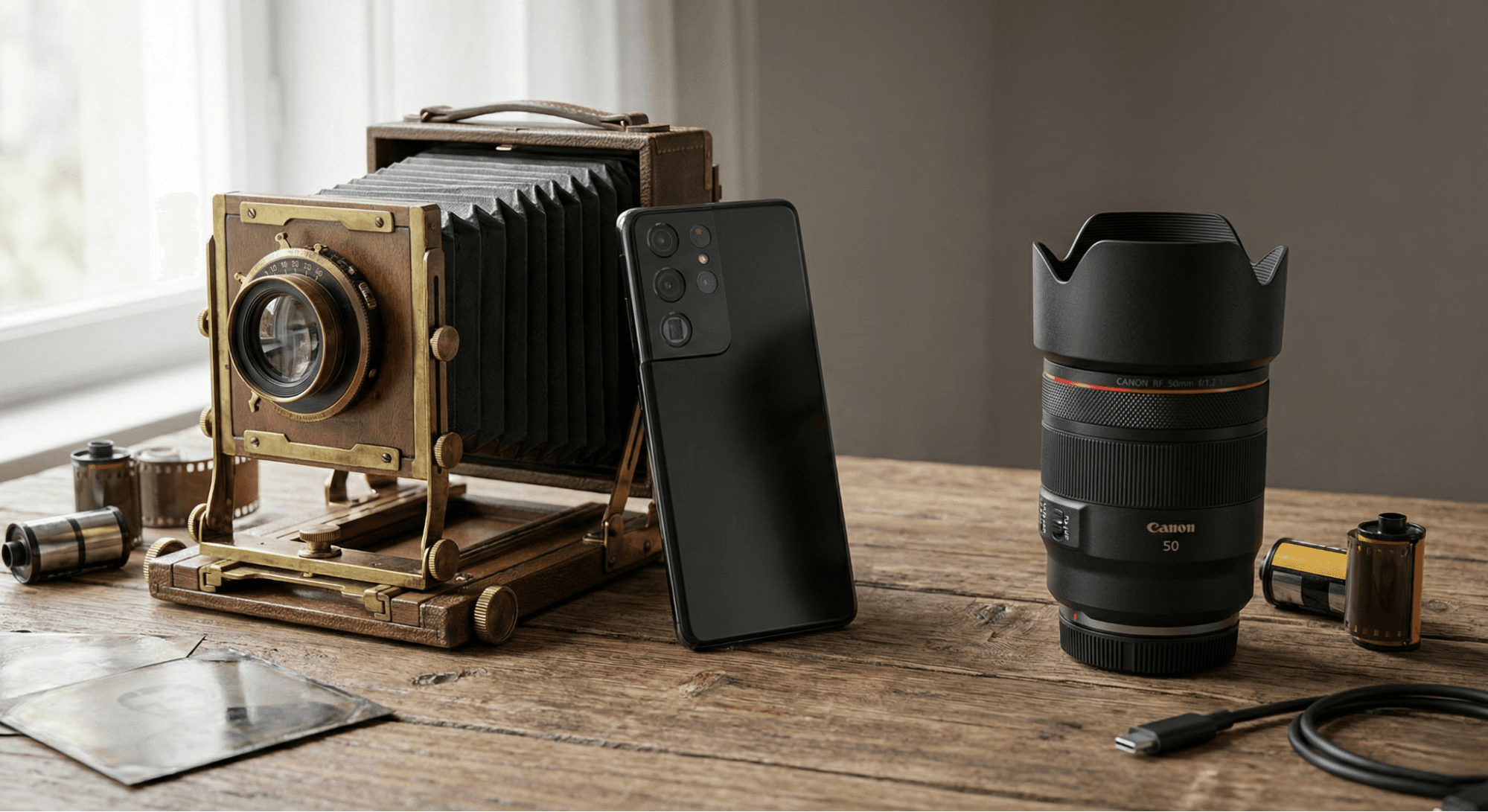
2. History & Evolution: From Camera Obscura to Al
The journey of photography is a testament to human innovation. It didn't start with the smartphone in your pocket.
The Origins (Camera Obscura):
Long before film, ancient scholars discovered that light passing through a small hole could project an inverted image. This was the birth of the camera concept.
The Film Era:
The 19th and 20th centuries saw the rise of chemical photography. Kodak brought photography to the masses, making it possible for ordinary people to document their lives.
The Digital Revolution:
The shift from film to digital sensors changed everything, allowing for instant review and endless storage.
The Computational Era (Present Day):
Today, photography is symbiotic with software. Modern cameras and smartphones use intelligent processing to enhance dynamic range, correct lighting in real-time, and even reconstruct details.
Understanding this history helps us appreciate that while the tools change, the desire to capture a moment remains constant.
3. Types of Photography
Photography is a vast field with numerous niches. Finding your specific interest can help you choose the right gear and improve faster.
Landscape Photography:
Capturing the vastness of nature. Requires patience and often a tripod.
Portrait Photography:
Focusing on human subjects, expressions, and emotions. Lighting is critical here.
Macro Photography:
Capturing extreme close-ups of small subjects like insects or water droplets, revealing details invisible to the naked eye.
Street Photography:
Candid documentation of public life and society.
Product Photography:
Essential for marketing; focuses on making objects look appealing.
Astrophotography:
Capturing the night sky, stars, and galaxies, often requiring long exposures.
4. Essential Photography Principles
You don't need the most expensive camera to take great photos, but you do need to understand the rules of the visual language.
The Exposure Triangle
Every photograph is governed by three pillars:
1. ISO:
The camera's sensitivity to light.
2. Aperture:
The opening in the lens that controls depth of field (how blurry the background is).
3. Shutter Speed:
How long the sensor is exposed to light (freezing motion vs. capturing blur).
Composition Rules
How you frame your shot determines its impact.
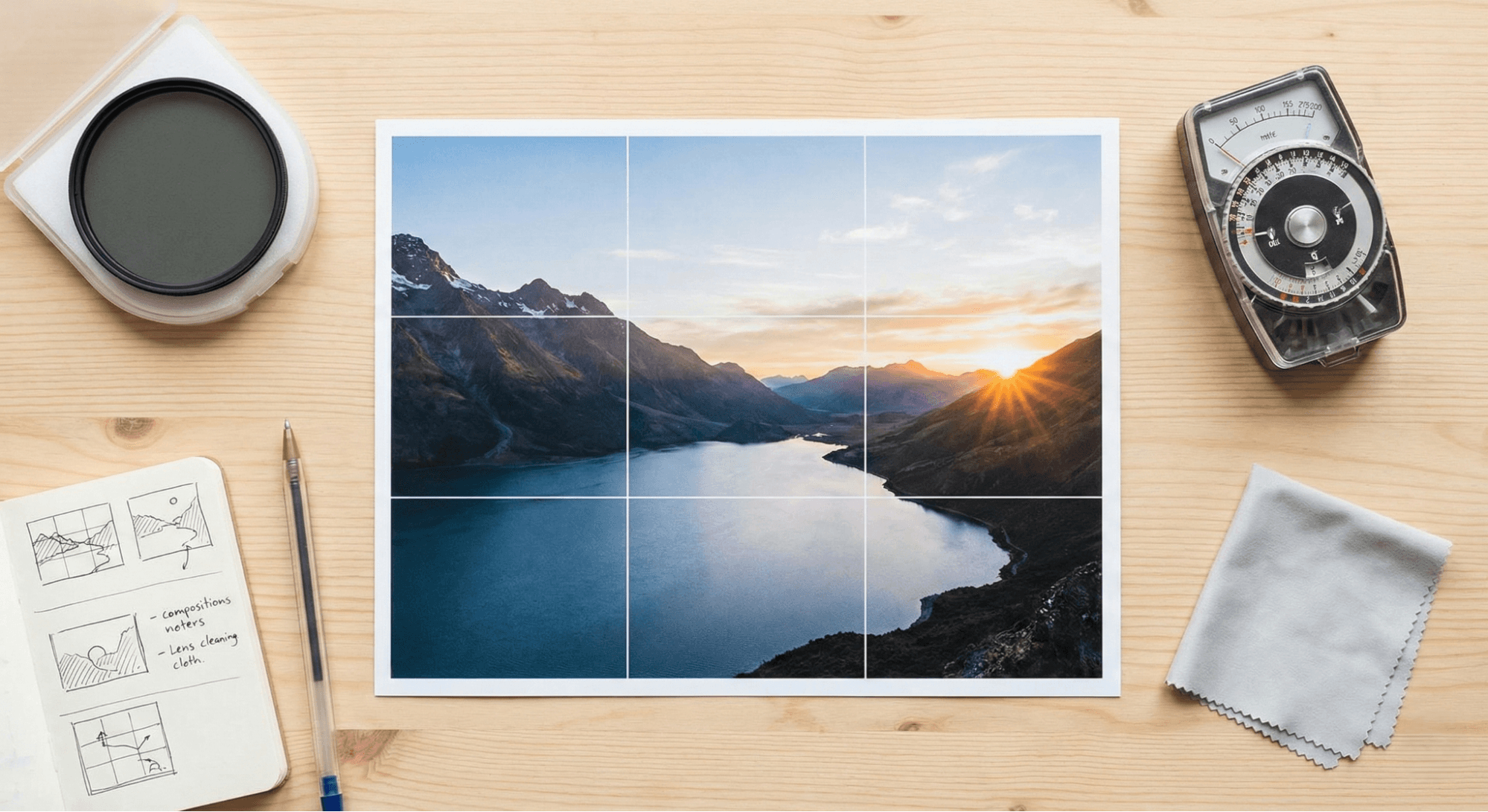
Rule of Thirds:
Dividing the frame into a $3\times3$ grid and placing subjects at the intersections.
Leading Lines:
Using natural lines (roads, fences) to guide the eye to the subject.
Symmetry:
Creating balance for a pleasing, harmonious look.
For a deeper dive into these foundational rules, you might find our guide onWhat Are the 7 Basics of Photography? A Complete Beginner’s Guide incredibly useful for mastering the technical side.
5. Tools & Equipment for Photography
The "best" camera is the one you have with you, but having the right tool for the job certainly helps.
Smartphones:
Modern flagship phones now rival professional cameras for everyday use, thanks to computational photography and advanced sensors.
Mirrorless Cameras:
The standard for professionals today. They are lighter than older DSLRs and offer superior video and autofocus capabilities.
DSLRs:
While becoming less common, they are still beloved for their optical viewfinders and battery life.
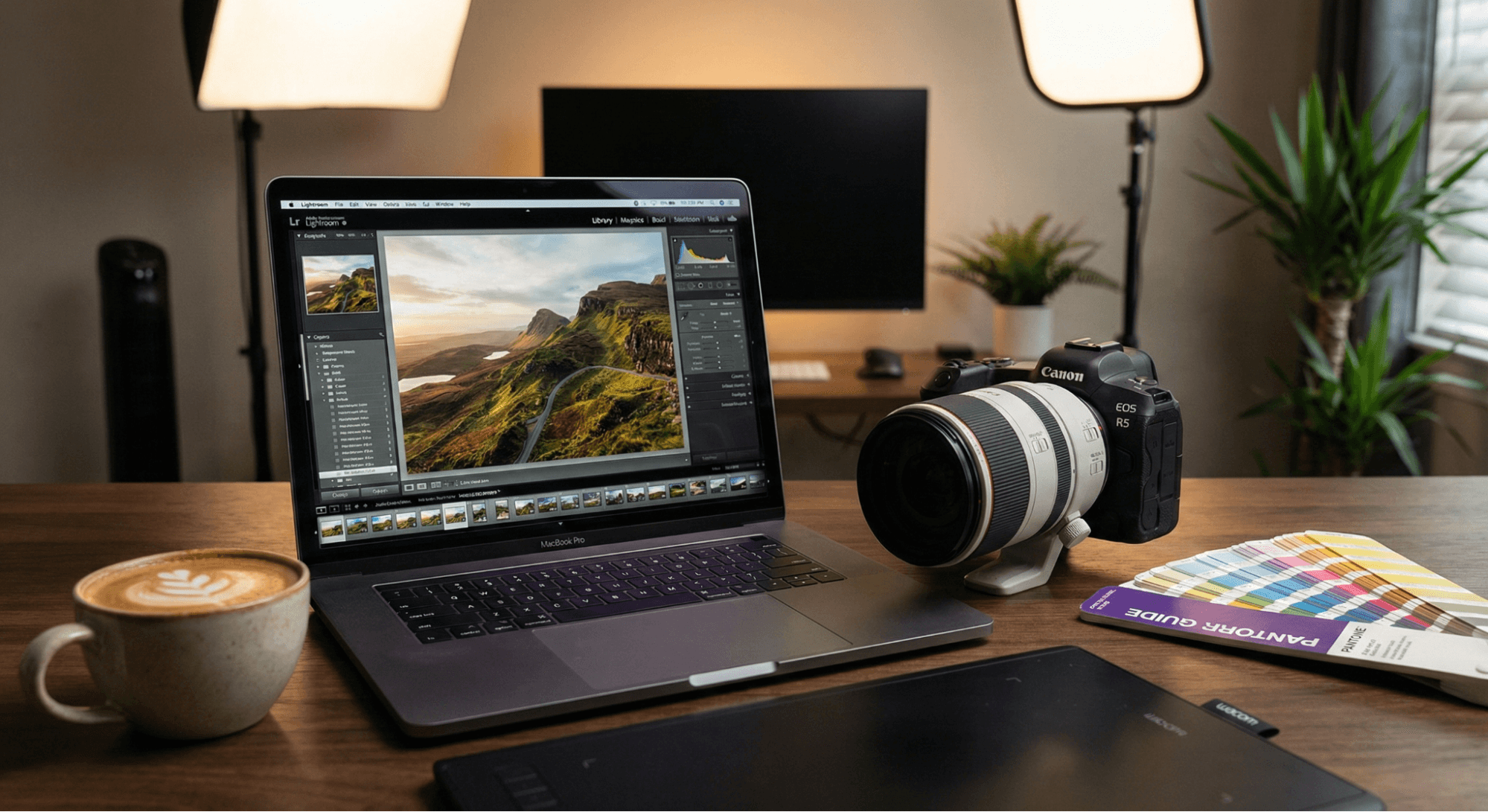
Editing Software:
Tools like Lightroom, Photoshop, and mobile apps are now essential parts of the photography workflow.
If you are struggling to decide what gear to buy, check out our article onHow to Choose the Best Camera for Your Photography Style? to narrow down your options.
6. Photography as a Creative & Professional Skill
Photography is not just a hobby; it is a vital skill in the professional world.
Content Creation:
High-quality visuals are the currency of social media.
Marketing & Branding:
A distinct visual style helps brands stand out in a crowded market.
Design Resources:
Graphic designers constantly rely on photography for textures, backgrounds, and layouts.
Designers often capture their own images to ensure originality in their work. If you are curious about how visual skills overlap with professional design roles, you can explore What Does a Designer Do? A Comprehensive Guide to Roles, Responsibilities, and Skills.
7. Tips for Beginners to Start Today
Master the Light:
Learn to see how light falls on your subject. Golden hour (just after sunrise or before sunset) provides the most flattering natural light.
Move Your Feet:
Don't just zoom in. Physically moving closer or changing your angle often results in a more dynamic composition.
Analyze Photos You Love:
Look at images that stop you in your tracks and ask why they work. Is it the color? The emotion? The framing?
Edit Gently:
Post-processing should enhance a photo, not rescue a bad one. Aim for a natural look.
Usability & Design: Why Photography Matters for Creatives
For designers and visual storytellers, photography provides the raw material for creativity. Using high-resolution photos (4K, RAW) ensures that your designs remain crisp on modern displays. Understanding the difference between a static image (posed, still) and a dynamic image (movement, action) can drastically change the mood of a website or advertisement.
Conclusion
So, what is the meaning of photography? In today's visual world, it is the universal language of our digital age. It is a blend of technical skill, artistic vision, and emotional intelligence. Whether you are snapping photos with a phone or setting up a studio shoot, photography allows you to document your reality and share your unique perspective with the world.
We encourage you to pick up a camera any camera and start experimenting. Focus on what inspires you, whether that's the symmetry of architecture or the chaos of street life.
@All assets in this blog are sourced from Wallpezia